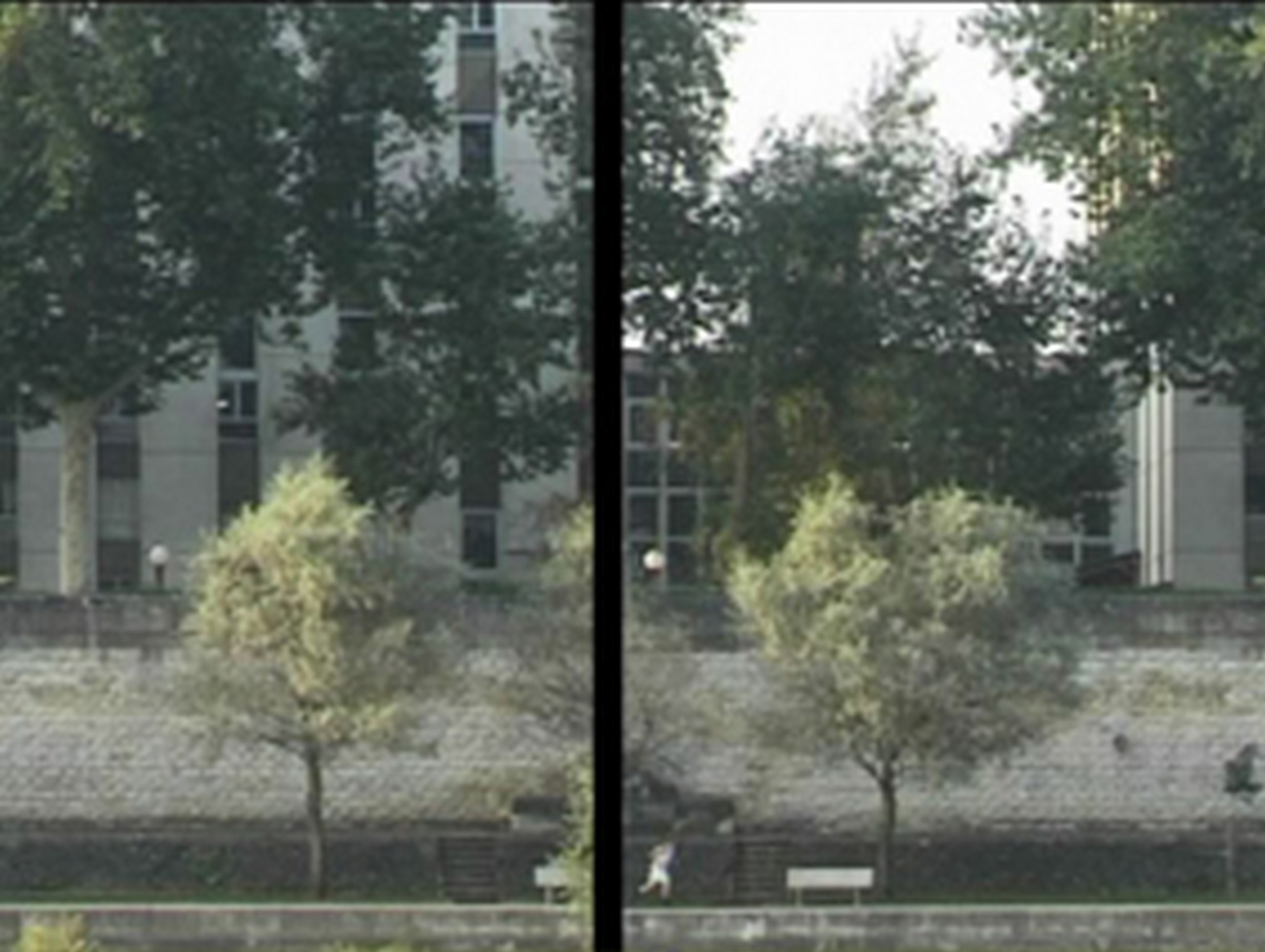
Training in the frame exploits the form of the content, that of exhausting performance, to question the validity of using an extreme physicality in the performance by reducing its impact (one hour of racing is limited, using the constraints of editing ,to less than ten minutes). The viewer is led to wonder whether what he sees is a loop or a repeated act. One type of ellipse is obviously noticeable, but the degree to which this is used is rendered invisible because only the best takes are shown in the images. At the moment where the situation becomes clearer for the audience, the referential aspects of the film start to cover the tracks; if this is a remake of ‘Back and Forth’ by Michael Snow, where are the other characters? Or is it that these movements across the screen are a tentative attempt to fill all of the television frame at every phase? If this is the case why does the editing render this impossible by causing displacement at the right/wrong time?, The final result is a piece that outlines a kind of autonomy, resisting clear identification of a performer, an author, or an argument, asking without words that recurring question: is it art?
Credits