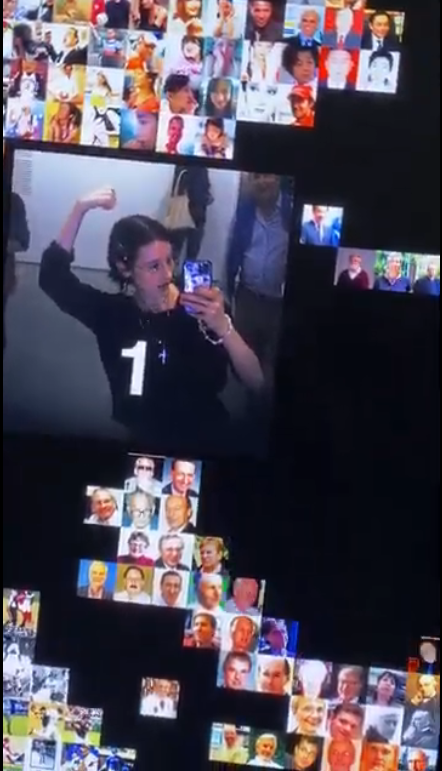
Plastic Pilgrims is a docufiction of a full-circle story that follows the journey of a second-handphone. Stolen and resold, it reveals its journey from Shenzhen, specifically The Feiyang Timesbuilding (colloquially mythologized as the stolen iPhone building) and through this, graduallyunfolds questions around the economies and ontologies of scaled up technology, e-waste andthe architectures of accelerated connectivity.The stolen phone is positioned here as a disincarnate “civilizing trickster", a figure found inmythology, despite being disruptive and chaotic, plays a crucial role in establishinginfrastructure and society through communicating with the protagonist. Through itsdisembodied voice, it ferries across borders and narrates what it witnesses, speaking thestrange tongue of machines. The film follows different states of revelation through a cast ofmetafictional characters--from a skeptical materialist friend, to technology philosophers,vloggers and an evangelist streamer, calling for the destruction of the thinking machine.Together they operate in an intermedia world where everyone is constantly broadcasting.Formally, the film uses a ‘lensjacking’ technique; capturing and collating footage by off-cameras including body cams, recorded video calls, published surveillance footage, Meta Ray-Ban Smart Glasses, iphone and found footage.Starring: Amelia Moriarty and Gideon Jacobs; Featuring: Marek Poliks & Roberto Alonso Trillo of Disintegrator Podcast and @astrojoke_archiveWritten, directed and edited by: Ruba Al-SweelResearch support: Yidi Wang and @astrojoke_archiveRunning time: 38’ 39”Plot“There are many internets” proclaim Marek and Roberto who, in this universe, are Bilibili vloggers, spreading the gospel of technology’s ontology. Amelia Hope, the main character, swears her phone is talking to her but her best friend, Screamgyal, is one of those terminally online disaffected skeptics. She keeps invalidating Amelia through several video calls in which the long distance friendship plays out. Typical of the detached jokester trope in every horror film, Screamgyal dies first. The phone? Speaking the strange tongue of machines just wants to tell you of how it was stolen and resold. How it journeyed a new Silk Road. How its body was split open and Frankensteined anew, how air in the damp factories tasted of metal and stonecutters with hunched backs wiped their fingerprints away against its glass.
Elsewhere, astrojoke_archive is a chinese vlogger. She drops a new episode in her series on Shanzhai where she expands on how this growing phenomenon is the bastard child of grassroots culture with global capital, and where fake “nokir” phones creeping up on the sidewalks by metro stations aren’t simply degrading the original: they are participating in a process of open source design. But on EschatonNet, the network at the end of time, Father Bartholomew Mary is an avid and popular evangelist streamer, broadcasting sermons and regularly taking questions from his followers. In one episode, he tells us to throw these evil phones in a fire only for the phone to take host in him and hold a captive audience to deliver a message.
Credits